Beyond Eradication: The Smallpox Vaccine's New Role
The word "smallpox" once struck fear into the hearts of humanity, conjuring images of disfiguring lesions, blindness, and death. For centuries, this relentless disease plagued populations worldwide, claiming countless lives. Then, a triumph of global public health emerged: the eradication of smallpox, achieved in 1977, marking it as the only human disease to be completely wiped out from the planet. At the core of this monumental achievement was the
Smallpox Vaccine: The Shot That Eradicated a Disease. However, the story of the
Smallpox Vaccine did not end with eradication. In an ever-evolving world, this remarkable medical innovation has found itself reprising a crucial, albeit different, role, adapting to new threats and challenges.
The Legacy of a Landmark Achievement: Eradicating Smallpox
The journey to smallpox eradication began long before the 20th century, tracing its roots back to the late 18th century. It was British physician Edward Jenner who, in 1796, famously observed that milkmaids exposed to cowpox, a milder virus, seemed immune to smallpox. This insight led to his groundbreaking work with "variolae vaccinae" (smallpox of the cow), giving us the very word "vaccine" (from *vacca*, Latin for cow). Jenner's pioneering efforts laid the foundation for modern immunology and public health.
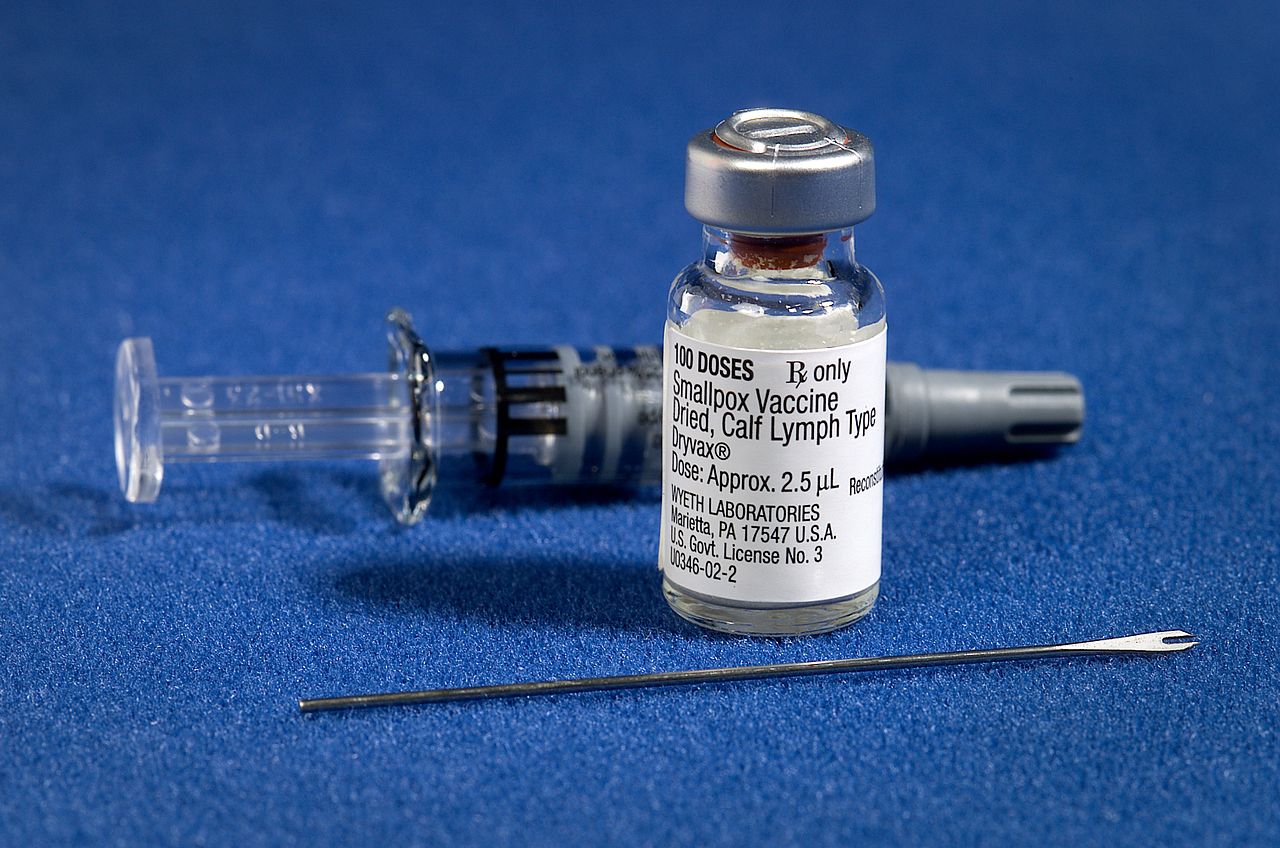
Fast forward to the mid-20th century, when the World Health Organization (WHO) launched an intensified global vaccination campaign from 1958 to 1977. Utilizing a robust and effective vaccine, delivered through an ingenious bifurcated needle, healthcare workers around the globe systematically immunized populations, breaking the chain of transmission. This unprecedented international collaboration culminated in the eradication of smallpox, a testament to what collective human effort and scientific advancement can achieve. For many years, the
Smallpox Vaccine was considered a historical relic, a symbol of past victory. Yet, recent developments have propelled it back into the spotlight.
The Modern Smallpox Vaccine: More Than Just History
Today, while routine smallpox vaccination is no longer performed on the general public, the
Smallpox Vaccine remains an essential tool in global health security. Its continued production and strategic stockpiling are primarily driven by two critical concerns: the threat of bioterrorism and the emergence of related viral diseases, most notably mpox (formerly known as monkeypox).
The modern smallpox vaccine typically uses the vaccinia virus, an orthopoxvirus that is genetically distinct from both variola (the smallpox virus) and cowpox viruses. Crucially, vaccinia provides robust cross-protection against smallpox, making it an ideal candidate for immunization. When administered properly, the vaccine is close to 100% effective. It can even prevent or significantly modify the disease if given within 3 to 4 days of exposure, and potentially even after longer delays, offering a vital window of post-exposure prophylaxis. The fact that this vaccine, developed centuries ago, still holds relevance highlights its enduring scientific value and potential as a first line of defense against future biological threats.
Understanding the Smallpox Vaccine Administration and Expected Outcomes
The administration of the smallpox vaccine is a unique process, distinct from many other injections. It doesn't typically require special skin preparation, though if alcohol is used for cleaning, the skin must be allowed to dry completely to avoid inactivating the live virus vaccine. The vaccination itself is performed using a bifurcated needle – a small, two-pronged fork.
Here’s a breakdown of the process and what to expect:
- Technique: The bifurcated needle is held perpendicular to the skin, typically on the upper arm.
- Punctures: For primary vaccination (first-time recipients), three rapid punctures are made. For revaccination, fifteen punctures are applied. These punctures are made with enough vigor to ensure a trace of blood appears within 15 to 20 seconds. This ensures the live vaccinia virus is successfully introduced into the epidermal layer of the skin.
- The "Take" Reaction: A successful primary vaccination, or "take," is characterized by a series of distinct reactions at the vaccination site:
- Days 3-4: The site becomes reddened and pruritic (itchy).
- Days 7-11: A large vesicle (blister) forms with a surrounding red areola, which then progresses to become pustular (filled with pus).
- Week 3: The lesion scabs over, eventually falling off to leave a small, permanent scar.
Understanding this process is vital for those who may be immunized in targeted campaigns, ensuring proper administration and recognizing a successful immune response.
Navigating the Risks: Why Caution Remains Key
Despite its undeniable efficacy, the
Smallpox Vaccine, particularly older live-attenuated versions derived from calf lymph, carries well-documented safety limitations. While generally safe for healthy individuals, the risk of adverse events necessitates careful screening and targeted use in a post-eradication world.
The most common adverse event is fever. However, more serious complications, though rare, can occur. These include:
- Eczema Vaccinatum: A potentially severe, disseminated vaccinia infection occurring in individuals with a history of eczema or other exfoliative dermatitis.
- Vaccinia Necrosum (Progressive Vaccinia): A serious and often fatal condition seen in immunocompromised persons, where the vaccination lesion progressively enlarges and fails to heal.
- Autoinoculation: The transfer of the vaccinia virus from the vaccination site to another part of the body, most commonly the eye, which can lead to keratitis (inflammation of the cornea) and potentially scarring or blindness.
- Generalized Vaccinia: Widespread vaccinia lesions appearing distant from the vaccination site.
- Myopericarditis: Inflammation of the heart muscle and/or the sac surrounding the heart.
- Encephalitis: Inflammation of the brain.
The risk of death from vaccinia is estimated to be approximately one case per 1 million primary vaccinations. Furthermore, a significant portion of the population (up to 30% or more) has contraindications to the traditional live attenuated vaccine. This includes infants, pregnant or breastfeeding women, immunocompromised individuals, those with eczema or other exfoliative skin disorders, and people with cardiovascular conditions. Crucially, even those living in the same household or in intimate contact with individuals exhibiting these conditions are generally advised against vaccination, due to the risk of secondary transmission of the vaccinia virus. For a deeper understanding of these concerns, refer to
Smallpox Vaccine Risks: Who Should Not Get Immunized?.
Innovating for Safety: The Evolution of Smallpox Vaccines
The inherent safety limitations of the older live, attenuated vaccinia virus vaccines, while acceptable during a global eradication campaign, became a significant concern for potential widespread use in civilian populations in the absence of an outbreak. The estimated 14–52 serious or life-threatening adverse reactions per million immunized, and 1–2 deaths per million primary vaccinees, highlighted the need for safer alternatives if mass immunization ever became necessary again.
This critical need spurred the development of alternative
Smallpox Vaccines. One notable advancement is the development of a new vaccine derived from cell culture, as opposed to the traditional calf lymph. Clinical trials have compared this cell-cultured vaccine with the older calf-lymph-derived vaccine in healthy adults. The results have been promising: all but one participant developed pock lesions, indicating an effective immune response, and vaccine-associated adverse reactions were found to be similar between the two groups. This suggests that the cell-cultured vaccine is as immunogenic and safe as its predecessor. Such innovations are vital, as they offer the potential for a safer vaccine profile that could be more broadly deployed in targeted populations, such as first responders or healthcare workers, or even more widely if a bioweapon attack were to occur. These new vaccines represent a strategic shift towards preparedness, aiming to mitigate risks while retaining the powerful protective benefits of immunization.
The journey of the
Smallpox Vaccine is a profound narrative of medical progress, global collaboration, and enduring vigilance. From its humble origins with Edward Jenner's observations to its central role in eradicating a global scourge, this vaccine has carved an unparalleled place in human history. Today, its story continues, evolving from a tool of eradication to a critical component of biodefense and public health preparedness against emerging threats like mpox. While routine vaccination remains a relic of the past, the strategic production and continuous innovation in smallpox vaccine technology underscore humanity's commitment to safeguarding against past scourges and future challenges, ensuring that the legacy of eradication is not just preserved, but continuously adapted for a safer tomorrow.